
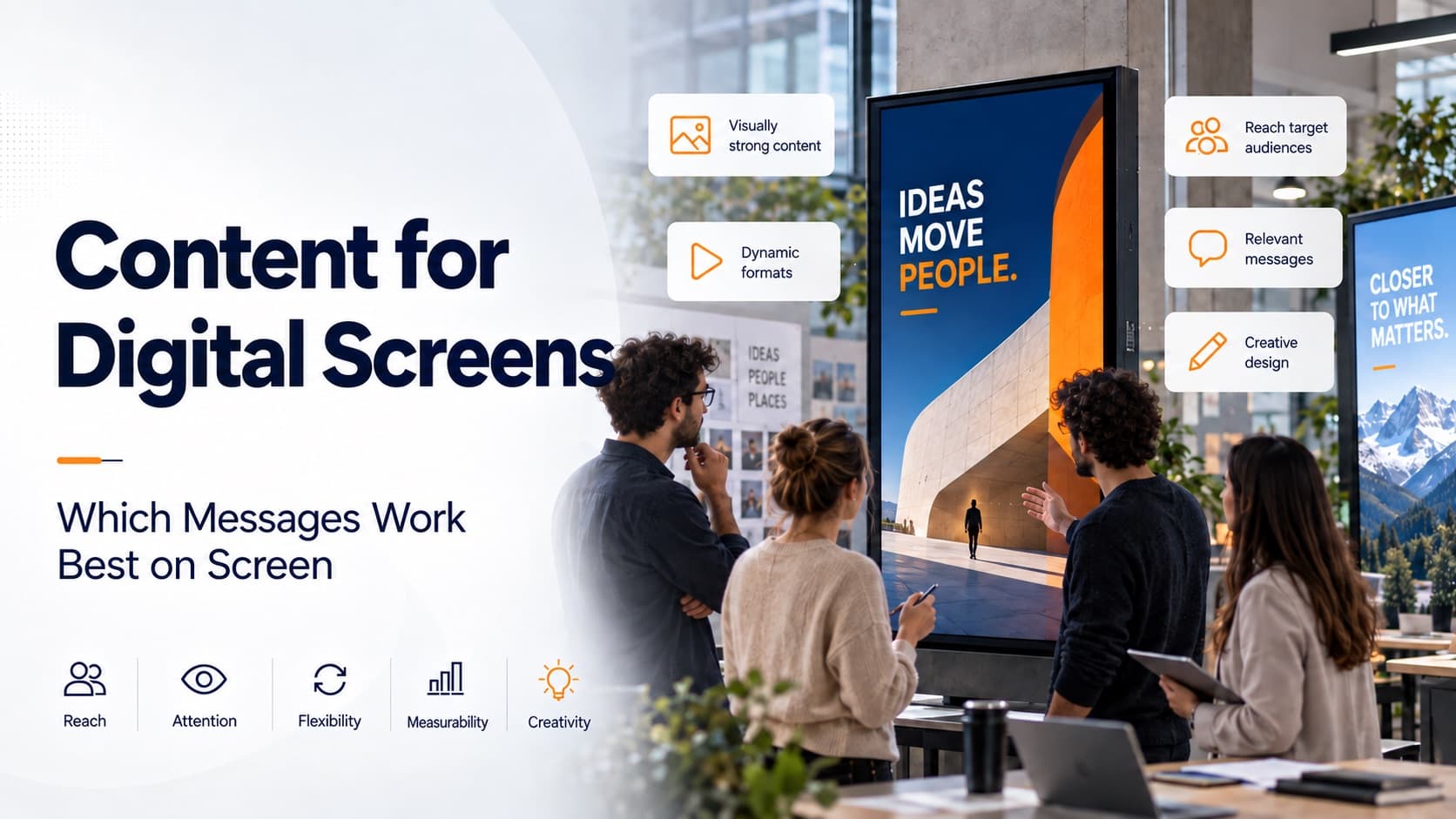
Digital screens are only as effective as the content they display. A screen on its own does not create impact. The right content for digital screens needs to be easy to understand, visually clear, and suited to its location.
People often notice screen messages while walking past or during a short wait. There may be only a few moments to attract attention and communicate the idea. Effective digital signage content gets to the point quickly and guides the viewer's eye with purpose.
Keep it concise and clear
Too much information on one slide makes a message harder to absorb. Long paragraphs, small type, and crowded layouts rarely work well on screens. The main idea should be recognizable immediately from the normal viewing distance.
A clear headline, one strong visual, and a small amount of supporting information are often enough. Each slide should communicate one primary message. More detailed information can be split across several slides or linked through a QR code to a dedicated page.
Use visually strong content
Images, video, and subtle animation can attract the eye more effectively than text-only layouts. Product images reveal key details, emotional scenes establish a mood, and short clips explain a process or use case. Motion should be deliberate and support the message.
The content also needs to fit the location. A gym requires different visuals from a pharmacy, parcel shop, or retail store. When the subject, language, and design reflect the audience, the screen communication becomes more relevant.
Keep content current and relevant
Digital signage depends on current information. Expired promotions, old event dates, and incorrect opening hours look unprofessional and can confuse viewers. Content should be reviewed regularly and assigned a clear end date.
Seasonal topics, daily offers, events, opening hours, and short-notice updates are particularly well suited to digital screens. Central scheduling allows content to start automatically and disappear when it expires. The program remains current without editing every screen individually.
Target content more precisely
Not every screen needs to show the same message. Different content may be appropriate depending on the location, time of day, and viewing situation. Morning offers can differ from evening messages, while an entrance screen serves a different purpose from a display beside a shelf or checkout.
A digital signage platform organizes content by screen, location, and schedule. This makes the program more visually coherent and aligns each message more closely with its purpose.
Design specifically for the screen
Moving an existing print poster onto a screen without adapting it uses only part of the medium's potential. Digital content should account for format, resolution, viewing distance, and display duration. Portrait and landscape screens, for example, require different compositions.
A quick real-world check helps before publication: Is the main message readable from several metres away? Is it visible long enough to understand? Is the intended next step immediately clear? Our article about poster digitization explains the transition from print to screen in more detail.
Conclusion
Effective content for digital screens is clear, relevant, current, and visually strong. Businesses should adapt messages to the screen and viewing situation instead of simply displaying an unchanged print poster.
With Adslide, digital content can be managed centrally, scheduled in advance, and published across different displays. Screens become an effective communication channel for advertising, information, and customer engagement.