
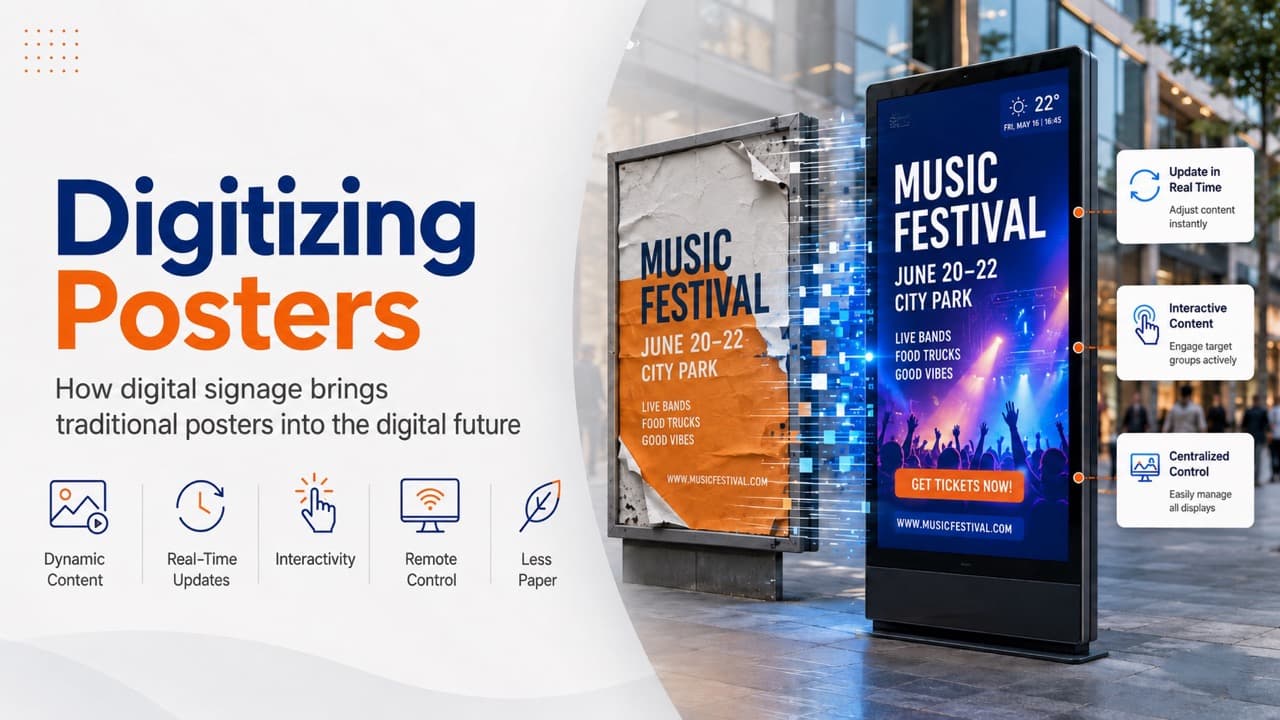
In a world shaped by technology and innovation, digitization plays an increasingly important role in our daily lives. This progress has not stopped at the advertising industry. Traditional posters on street corners and in shopping centers are increasingly being replaced by digital alternatives known as digital signage.
In this article, we look at how poster digitization works best, which advantages it offers, and how digital signage plays an important role.
What does poster digitization mean?
Poster digitization refers to the transition from conventional printed posters to digital and interactive advertising displays. Instead of static content that cannot be changed, digital posters offer dynamic content that can be easily updated and adapted. This enables companies to communicate their messages flexibly and capture the target group’s attention more effectively.
Advantages of poster digitization:
- Dynamic content: Digital posters allow advertisers to make their messages more engaging through moving images, videos, and animations. This helps them attract passers-by more effectively and communicate their messages more clearly.
- Real-time updates: Unlike printed posters that have to be replaced manually, digital content can be updated in real time. This is especially useful for time-sensitive offers or event announcements.
- Cost savings: Although the initial investment for installing digital signage can be higher, poster digitization saves long-term costs for printing and logistics of physical posters.
- Interactivity: Digital posters can include interactive elements that increase audience engagement. For example, passers-by could tap the screen to access more information or take part in surveys.
- Audience targeting: With the help of digital signage, advertisers can create more targeted content for their audiences. By integrating data analysis, they can better understand customer behavior and interests and offer tailored content.
How can digital signage help?
Digital signage plays a decisive role in implementing poster digitization. Here are a few ways digital signage can help:
- Flexibility and remote control: Digital signage makes it possible to manage content centrally from one place and update several locations at the same time. This is especially useful for companies with multiple branches or advertising locations.
- Real-time information: Thanks to connectivity, digital content can be displayed in real time. Examples include current news, weather data, or social media feeds to keep the audience up to date.
- Interactivity and personalization: Digital signage enables interactivity by allowing users to interact with content. This can happen through touchscreens or facial recognition, for example, to provide personalized content.
- Data analysis and performance measurement: Digital signage enables the collection of data about audience behavior, such as number of views, interaction rates, and dwell time. This data can be used to fine-tune advertising strategies and optimize content.
- Lower environmental impact: Poster digitization helps reduce paper consumption, which makes a positive contribution to the environment.
Conclusion
Overall, poster digitization through the use of digital signage offers a wide range of advantages. The ability to adapt content dynamically, update it in real time, and integrate interactive elements makes this modern form of advertising highly effective. It is therefore attractive for companies that want to address their target groups in an innovative way.
It is clear that digital signage is changing the future of the advertising industry and plays a key role in transforming posters for the digital era.