
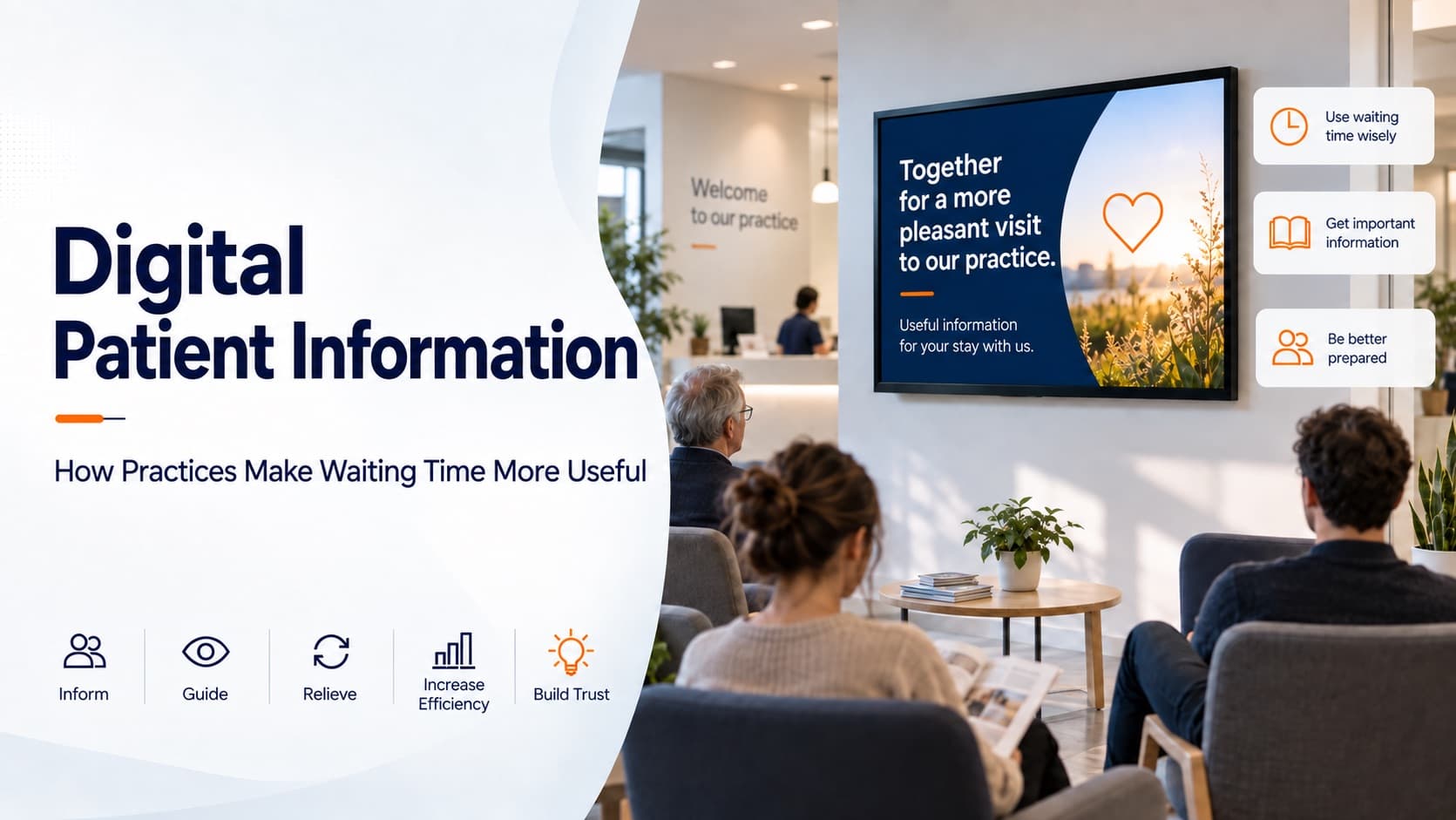
Waiting is part of daily life in many medical practices. It can be uncomfortable for patients, while practice teams must also handle routine organizational questions. Digital patient information can help: screens in the waiting room present practical notices, practice services, and general health topics in a clear, visible format.
Instead of relying on printed notices, flyers, or crowded bulletin boards, practices can present selected information digitally. This makes updates easier and gives patients a clearer sense of what they need to know. The content should be relevant, easy to read, and kept up to date.
Make waiting time more useful
While they wait, patients have time to learn about topics that may be relevant to their visit or health. A screen can highlight preventive care, vaccination services, practice procedures, or seasonal health topics. This makes waiting time more informative without replacing a conversation with the practice team.
Screens can also answer common organizational questions: Which documents should patients bring? How can they request a prescription? When can they reach the practice by phone? How do they book a follow-up appointment? Brief, recurring notices can remain in rotation, while time-sensitive information can be scheduled when it is needed.
Explain services clearly
Many practices offer services that patients may not know about. Digital patient information can introduce health checks, skin screenings, preventive care, diagnostic procedures, and other services. A plain-language overview helps patients understand what is available and ask more focused questions if they are interested.
The screen should provide an overview rather than individual medical advice. Medical statements should be reviewed by qualified staff and written so people without specialist knowledge can understand them. Personal questions and decisions still belong in a conversation with a qualified professional.
Build trust through clear communication
A modern practice also depends on good communication. Screens can introduce the team, explain how visits work, or highlight areas of expertise. Patients gain a better sense of who will care for them and what to expect during their visit.
A calm, well-organized content program works best in a waiting room. Readable type, concise messages, and a measured pace help patients absorb information without making the space feel busy. Up-to-date content also shows that the practice takes communication seriously.
Ease the practice team's daily workload
Digital signage reduces the effort of printing, replacing, and distributing notices. Staff can prepare content centrally and change it at short notice. This is useful for opening hours, holidays, seasonal services, or changes to daily procedures.
Recurring on-screen guidance can reduce simple questions, leaving more time for matters that need a personal conversation. Content should be reviewed regularly so outdated notices do not remain on display. Explore more applications on our digital signage for medical practices page.
Conclusion
Digital patient information makes waiting time more informative, improves communication, and can help practice teams with recurring questions. Medical practices can make services more visible, explain procedures, and keep important notices current.
With a solution such as Adslide digital signage, content can be managed centrally and updated flexibly. The waiting room becomes a well-organized communication space that helps patients find the information they need.